Showing posts with label Anglican. Show all posts

Wednesday, February 3, 2016

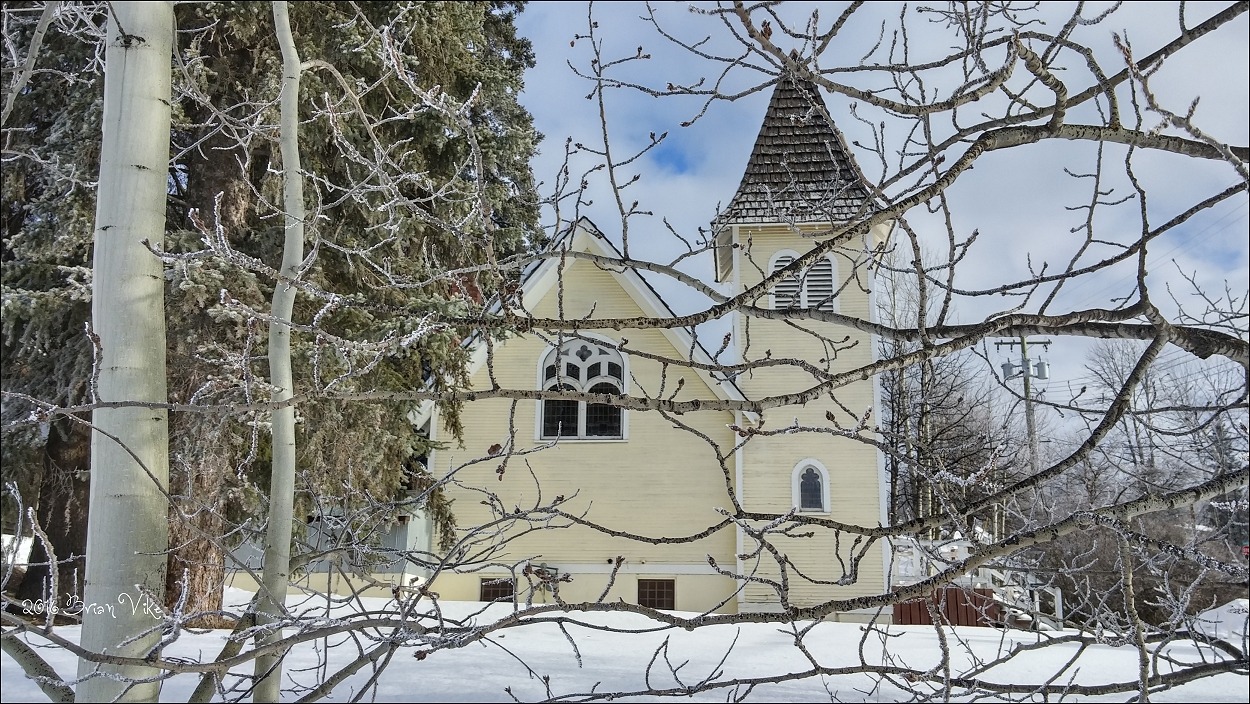
1927 Historic St. John’s Anglican Church Burns Lake British Columbia (Pictures)


Above Photo: The historic St. John’s Anglican Church located in 
Burns Lake, British Columbia.

St. John’s Anglican Church is a wonderful heritage building and is located on 1st Avenue, right off Highway 16. The Church was built in 1927 by a resident priest and later opened to the public in 1929.

When visiting, or passing through Burns Lake, make time to visit this historic St. John’s Anglican Church.

Burns Lake is a very interesting village to visit, besides the warm welcome you receive from it’s residents, it is a fishermen's paradise. 


Above Photo: The historic St. John’s Anglican Church located in 
Burns Lake, British Columbia.

There are countless lakes to wet your line in, and I can tell you from my personal experience, you will walk away smiling, starting to plan your next trip back to this beautiful fishing oasis.

Burns Lake is also your gateway to Tweedsmuir Provincial Park, an outdoor playground for everyone. In this magnificent wilderness you can go boating, angling, camping, hiking and hunting.


Above Photo: The historic St. John’s Anglican Church located in 
Burns Lake, British Columbia.


Above Photo: The historic St. John’s Anglican Church located in 
Burns Lake, British Columbia.

You can hire professional guides to show you around, or you can take on the challenge for yourself, but please be prepared for this undertaking as it is a wilderness park.

Tweedsmuir Provincial Park - North and Tweedsmuir Corridor Protected Area:

Burns Lake and District Chamber Of Commerce and Visitors Centre.


Above Photo: Burns Lake, British Columbia is your “Gateway” to 
Tweedsmuir Provincial wilderness park.

Text below From Wikipedia, the free encyclopedia.

History: Burns Lake.

Burns Lake’s first inhabitants were the Carrier First Nations communities that spanned much of the Lakes District and beyond.

Burns Lake itself began as a small rest stop for travelers on their way to the Yukon Gold Rush. Many of these travelers spotted opportunity in the rich forestry, fur, and mining opportunities in Burns Lake and the surrounding area.

Bob Gerow, one of the main founders of Burns Lake, entered into partnership with Jack Seely and Howard Laidlaw to create Burns Lake Trading Company. Together, they built a store/hotel and a sawmill on Gerow Island, which would become the hub of trade for the surrounding area. The Village was incorporated on December 6, 1923. The first Mayor was G. M Gerow.

The first newspaper in Burns Lake was called the Observer, published and edited by Sidney Godwin. In the late 1950s, another newspaper, also called the Observer, was operated by Ralph Vipond. It closed in 1961.

The town continued to grow throughout the 20th century. Its current industries have become forestry and tourism, though many workers commute to jobs in the mining industry.

Burns Lake received nationwide attention on January 20, 2012, when an explosion destroyed Babine Forest Products, a wood mill which was one of the town's primary employers.

A number of historic buildings still stand including:

Travel British Columbia with Brian Vike blog, please contact me at b_vike@telus.net

Travel British Columbia with Brian Vike.

Travel Houston, British Columbia with Brian Vike.

Thursday, January 28, 2016

1913 The Old Church Smithers British Columbia (Pictures)


Above Photo: 1913 The Old Church Smithers, British Columbia.

The below information comes off a information sign on site.

St. James Anglican Church was the first frame building erected in Smithers. In March 1913, a Vestry Committee was formed here with the intention of raising funds for an Anglican Church, Subsequently, a subscription list was started and in early June, Mr. A. W. Smithers, chairman of the Grand Trunk Pacific Railway Company and in whose honour the town was to be named, gave the first subscription of $250.


Above Photo: 1913 The Old Church Smithers, British Columbia.

Two lots were secured on 1st Avenue by paying $110 down on a full price of $1,100 and architect and builder L. Schuller was given a contract to build the church at a price of $1,501. 

Money was difficult to raise in the days just before the First World war, so it was with great relief that Bishop Frederick DuVernet, 2nd Anglican Bishop of Caledonia, accepted a $300 donation from a Mrs. Plumptre of the St. James’ Women's Auxiliary, Toronto, agreeing that the new church be called “St. James’, provided that the newly appointed parson, Rev Kingstone, agreed.


Above Photo: 1913 The Old Church Smithers, British Columbia.

Although not quite complete at the time, St. James’ held its first on 7th December, 1913, an Evensong service led by Rev.Kingstone. The church register shows that this was attended by 25 people and a collection of $5.80 was taken.


Above Photo: 1913 The Old Church Smithers, British Columbia.

The register also show that Bishop Duvernet led the service on 5th July, 1914, attended by 22 people, and this may well be when the church was consecrated. No other record of the church having been consecrated exits.

On 2nd February, 1914, shortly after the church opened, Smithers’ first marriage ceremony was conducted here, uniting Mr. and Mrs. Ernie Hann.

By 1917 the church was already too small, prompting the addition of 12 feet to the east end of the church to form a Chancel. Sometime later, but prior to 1942, a 15 feet by 9 feet vestry was added. Subsequently, the original bell tower was removed as it was judged unsafe to support the bell. A new bell tower was placed on the ridge of the roof. The second bell tower was saved during the reconstruction and sits atop the structure.


Above Photo: 1913 The Old Church Smithers, British Columbia.

St. James’ church served Smithers continuously for 60 years, but by 1974 it had become too small for an expanding congregation. St. James’ hall, a separate building a few lots north (now demolished) was also beginning to show signs of age with a structurally unsound floor. 


Above Photo: 1913 The Old Church Smithers, British Columbia.

Even as St. James’ celebrated its 60th anniversary, a bold new venture was taking shape across town on Princess Street; the replacement of St. James’ Church with a multi-purpose, seven-day-a-week community centre that would house Worship Centre, Daycare facilities, Community Hall, kitchen, thrift shop and offices. As a fitting link between the old St.. James’ and the new, the stained glass window and various appointments were incorporated into a small chapel at the centre, creating a replica in miniature of the old church. 


Above Photo: 1913 The Old Church Smithers, British Columbia.

This was dedicated on 20th April, 1975, as the Fred Fowler Memorial Chapel, after the much beloved Lay Reader and Sunday school superintendent of 32 years. The design of the centre envisaged the addition of a separate church building at a later date. This new Anglican church of St. James’ was dedicated on May 6th, 1989 by Bishop John Hannen.

To help finance the new venture it was necessary for the congregation to sell the old church. As neither the town nor the province wanted it at the time, it was bought by a local businessman and used as a furniture store. 


Above Photo: 1913 The Old Church Smithers, British Columbia.

Subsequently, it changed hands a number of times and has been used variously to store: hardware (Marshall Wells), stationery supplies (Interior Stationary) and sports equipment (Sports Advantage). Roof leaks eventually made the building unsuitable even as a storage warehouse and it fell into disrepair.

This facility is operated by the Bulkley Valley Historical and Museum Society

The Old Church (Bulkley Valley Museum)

Travel British Columbia with Brian Vike blog, please contact me at b_vike@telus.net

Travel British Columbia with Brian Vike.

Travel Houston, British Columbia with Brian Vike.

Thursday, October 29, 2015

St. Stephen’s Anglican Heritage Church Telkwa British Columbia


Above Photo: A photo of the 1910 St. Stephen’s Anglican Heritage Church in 
Telkwa British Columbia.

In Telkwa British Columbia you will find a beautiful 1910 old church which sits right along sidfe Highway 16. It seems the Telkwa Museum Society looks after the church and will rent it out for special occasions. 

You can visit the Telkwa website for details if you wish to rent the old church.

If you have a picture or story you would like to share on the Travel British Columbia with Brian Vike blog, please contact me at b_vike@telus.net

Travel British Columbia with Brian Vike.

Travel Houston, British Columbia with Brian Vike.

Monday, October 12, 2015

1914 St. John The Divine Anglican Church Quick British Columbia (Photo)


Above Photo: 1914 St. John The Divine Anglican Church in Quick British Columbia.

On our travels around northern British Columbia we stopped at the St. John The Divine Anglican Church located in Quick British Columbia. 

The church was built in 1914 and stands today in fantastic condition. It sits on a nicely cut lawn, with colorful Fall bushes around it. 

Inside the church there is a old stove that would keep people warm in the winter months when attending church. There is also oil lamps that were used inside for the lighting.

Anyone one passing through Quick, B.C. is welcome to drop by as the doors remain open.

If you were driving west from Prince George, B.C. and you will be passing through Quick, keep your eyes open for the Quick Road West as you would make a left hand turn off of Highway 16 and onto Quick Road West. From there, it sits on the left hand side of the the road and not many yards off the Highway, actually if you look closely, you can see it from Highway 16.


Location for the church can be found on Google maps, link is below. 

If you have a picture or story you would like to share on the Travel British Columbia with Brian Vike blog, please contact me at b_vike@telus.net

Travel British Columbia with Brian Vike.

Travel Houston, British Columbia with Brian Vike.