
Above Photo: Sunset Lake recreation site, Topley, British Columbia.
Topley is a village in northern British Columbia, Canada and is located on Highway 16 between Houston and Burns Lake, British Columbia.
A man by the name of W.C. Lett founded the small community after the Grand Trunk Pacific Railway pushed tracks through Topley on the way to Prince Rupert in 1914.
He named the community after his father-in-law, William James Topley who was a well known Canadian photographer who was from Ottawa, Ontario. Sadly William James Topley passed away on November 16, 1930 at the age of 85 in Vancouver, British Columbia and was not able to visit Topley.

Above Photo: Sunset Lake frozen over at, Topley, British Columbia.
Although Topley is a small community, it has all the outdoor recreational things to do like most larger towns. There is a range of wildlife that can be spotted roaming the area, such as bear, deer, moose, mountain goat and all kinds of smaller critters.

Above Photo: Picnic table buried in snow at the Sunset Lake recreation site,
Topley, British Columbia.
You can hike for miles and miles through beautiful forested areas. Another nice place to visit when in Topley is their Sunset Lake. In summer months folks go fishing, boating, water skiing or just lay around soaking up the sun. As well as Sunset Lake, there are Swans, Elwin and Day Lakes located just south of Sunset Lake on a forest service road.
These lakes also hold Rainbow and Cutthroat trout as well as Char. There are no boat launches at these lakes, so you have to bring a car-top boat, canoe or something you can easily handle to get your boat on the lake.

Above Photo: Sunset Lake frozen over at, Topley, British Columbia.
There are nice grassy areas to park a blanket on, picnic tables scattered around the recreational site so you and your family can enjoy a nice launch. In winter months people head to the lake with auger in hand to cut a hole in the ice and then try their luck at catching a meal.
When my wife and I were there in the winter of January 2016, the road to the lake was plowed and also the parking lot. So everyone does have easy access to the lake.

Above Photo: Sunset Lake frozen over at, Topley, British Columbia.
Another important point I will add, is that Topley is the gateway to Granisle, British Columbia and B.C.’s largest natural lake. This would be Babine Lake and can be reached by following Highway 118 north from Topley. Fishermen flock to Babine Lake to catch large Rainbow trout and Char. Kokanee is also fished for as well as Sockeye salmon.

Above Photo: Sunset Lake frozen over at, Topley, British Columbia.
Also just minutes outside of Granisle is Red Bluff Provincial Park. This park is a beautiful park to camp in, or for a day visit. Here is a link so you can read up on everything Red Bluff Provincial Park has to offer.

Above Photo: Sunset Lake camping sign, just a little to cool for this at,
Topley, British Columbia.
Red Bluff Provincial Park:
For all information on Granisle, British Columbia and Babine Lake,
please contact the Granisle Visitors Centre at:
The below text is From Wikipedia, the free encyclopedia:

Above Photo: One of the farms that can be found close to Sunset lake in
Topley, British Columbia.
Some information on William James Topley below who had the community named after him.
William James Topley (13 February 1845 – 16 November 1930) was a prolific Canadian photographer based in Ottawa, Ontario. Topley was noted for his portraiture of Canadian politicians, and was a business partner of William Notman, taking over Notman's Ottawa studio in 1872.
A large number of photographs by Topley are now in the collection of Library and Archives Canada, including approximately 150,000 glass plates negatives and a set of 66 index albums covering the entire history of his Ottawa studios from 1868 until 1923.


Above Photos: From Topley, British Columbia.
William James Topley was born in 1845 in Montreal, and raised in Aylmer, a town just outside Ottawa in modern-day Quebec. His first exposure to photography was from his mother who purchased a camera in Montreal in the late 1850s.
In 1863, at the age of 18, Topley was listed as an itinerant photographer, but by 1864 he was working at apprentice wages for William Notman in Montreal. In 1867, the year of Canada’s confederation, when Topley was only 22 years old, he was placed in charge of a new portrait studio opened by Notman (his first outside of Montreal) on Wellington Street in Ottawa in a new purpose-built structure across from the new Parliament buildings.

Above Photo: One of the farms that can be found in Topley, British Columbia.
Topley clearly had very good business sense, becoming the “proprietor” of the Notman studio by 1872, and by 1875 opening a studio under his own name. King McCord Arnoldi (architect) designed the studio and residence on Metcalfe Street at Queen Street in 1875.
After building this rather overstated studio in 1876 he soon found that he had to abandon it and move to smaller quarters on Sparks St., where he and later his son continued to operate the Topley studio until they sold it in 1923. The studio attracted many political figures, including all the Prime Ministers from Sir John A.

Above Photo: A winter scene that can be found in Topley, British Columbia.
Macdonald to Mackenzie King. The studio also attracted the wives and daughters of nobility, political and business figures, Princess Louise Caroline Alberta (Princess Louise, Duchess of Argyll), The Countess of Aberdeen, Mrs. Robert Laird Borden, Mrs. Louis Philippe Brodeur, Mrs. Brown Chamberlin, Mrs. Louis Henry Davies, Lady Eileen Nina Evelyn Sibell Elliot, Mrs. John Peter Featherston, Mrs. William Stevens Fielding, Mrs. Edward Griffin, Mrs. Joseph Howe,
Mrs. Wilfrid Laurier.

Above Photo: A winter scene that can be found in Topley, British Columbia.
He catered to the well-to-do—as he himself said “If I can see beauty in the human face, and reproduce it, I can command three times the reward for my work than he who simply shoots a plate at his patron. True, in a small city, such a course limits trade, but one-half of the business with three times the prices is much better for mind and body and pocketbook.
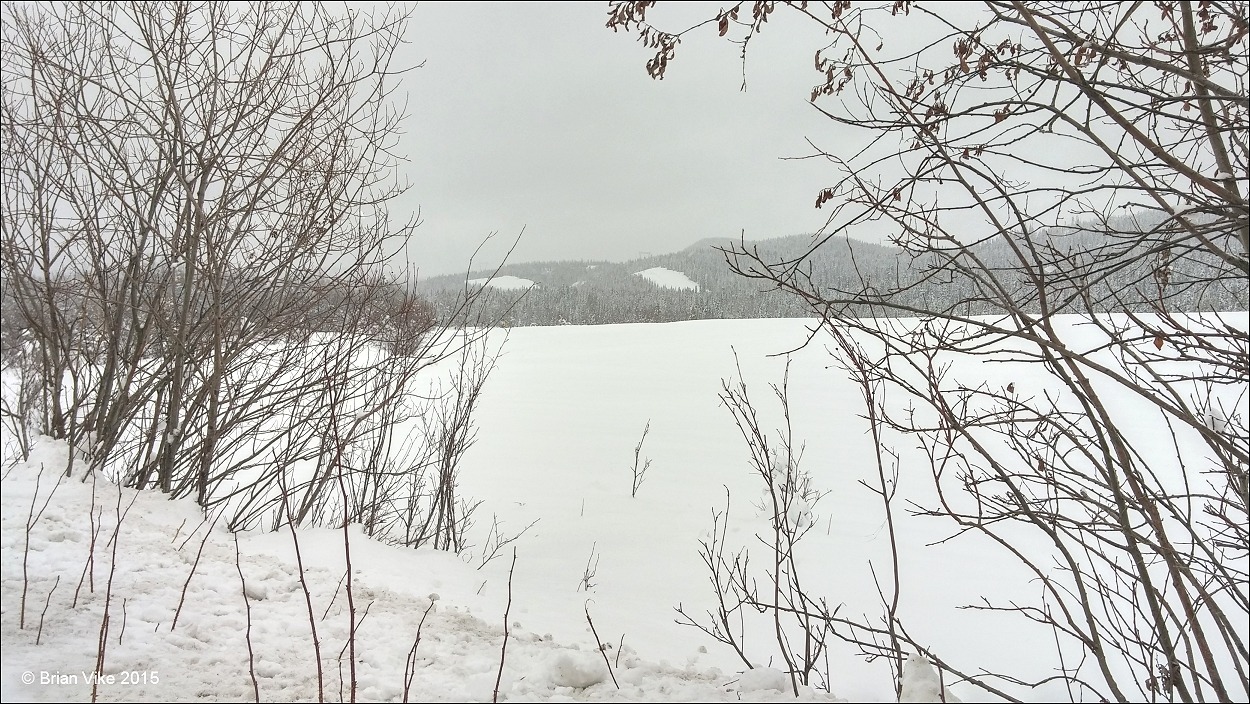
Above Photo: A winter scene that can be found in Topley, British Columbia.
Map/Directions to Topley, British Columbia:
Travel British Columbia with Brian Vike blog, please contact me at b_vike@telus.net
Travel British Columbia with Brian Vike.
Travel Houston, British Columbia with Brian Vike.


